The vibe-coded demo. The expensive rebuild.
The pitch went well. Then customers arrived: broken workflows, unreliable answers, no tests. Now your launch budget is paying for the same product twice.
CygnaByte is an AI development studio for startup founders. We build AI MVPs, agents, RAG knowledge systems and SaaS platforms, from first prototype to production.
Top Rated on Upwork100% Job Success14+ years shipping softwareAI products in production for founders
From your idea to a demo on your data, with a go/no-go at the end.
One use case, one number to move.
What you have, what's missing.
Model, RAG or agents. Only what earns its cost.
An architecture that survives launch day.
Roadmap, cost per user, fixed price.
A working demo on your data, and a go/no-go.
This is the AI Proof. Fixed price, two weeks.
 Go
Go Kafka
Kafka Redis
Redis PostgreSQL
 Kubernetes
 AWS
AWS GCP
GCP NestJS
 Next.js
 Nuxt
Nuxt Claude
 Stripe
A vibe coded demo is the easy part. Anyone can wire a chat box to a model in an afternoon. The hard part, and the part investors and customers actually pay for, is everything that happens after someone real starts using it at scale.
The pitch went well. Then customers arrived: broken workflows, unreliable answers, no tests. Now your launch budget is paying for the same product twice.
More users mean more tokens, model calls, and infrastructure. Miss inference costs and unit economics at scale, and growth can erase your margin.
A hundred users testing alone is nothing like a thousand arriving together. Slow model calls pile up, requests time out, and the customers you worked to win leave waiting.
of generative-AI projects abandoned after proof of concept
Gartner forecast
of AI projects fail, twice the rate of ordinary software
RAND
of AI pilots show no measurable return
MIT
None of that is a bad-idea problem. It's a built-like-a-demo problem. We build the version that ships, and the version that scales.
Everything below is something we’ve shipped for founders and supported in production. Pick the shape that fits; most products need two or three.
Turn the core hypothesis behind your startup into a focused, stable product for early users, partners and investors.
Build agents that can understand context, use tools, complete multi-step workflows and interact with your product or business systems.
Give AI secure access to proprietary documents, databases and domain knowledge so answers are grounded in the information that matters.
Create full products around AI: authentication, dashboards, billing-ready flows, admin experiences, integrations and intelligent features.
Turn operational, behavioral and transaction data into predictions, recommendations, explanations and conversational business intelligence.
Add AI to software you already have without rebuilding everything, from copilot experiences to automated workflows and intelligent search.
Most startup backends are built for the first hundred users and rebuilt for the first hundred thousand. We build the version that doesn't need rebuilding. The same architecture runs the social platforms, trading infrastructure, and SaaS products we've built for clients:
Go on every hot path. Stateless services in Go handle hundreds of thousands of concurrent connections per node on goroutines, and scale out horizontally on Kubernetes with autoscaling, so a traffic spike adds pods, not incidents.
Events, not bottlenecks. Every write is an event on Kafka. Services scale independently, spikes are absorbed with backpressure instead of outages, and a slow consumer never takes down a fast one.
A database architecture that grows with you. PostgreSQL with connection pooling, read replicas, and table partitioning from day one, and a sharding path designed before you need it. Redis for sessions, rate limits, caching, and real-time fan-out. Analytics on a store built for it, not on your production database.
Real-time at scale. WebSocket gateways with pub/sub fan-out for chat, feeds, notifications, and live prices; idempotent APIs, rate limiting, and circuit breakers so one bad client can't hurt the rest.
Load-tested before launch. Every backend is load-tested against its target concurrency with p99 latency budgets written into the harness, so you see the numbers before your users do.
Observable from day one. Metrics, traces, and alerts ship with the first release, so the 3 a.m. problem is a graph, not a mystery.
Millions of concurrent users is the design target for every social, marketplace, and trading backend we build, not a stretch goal we hope to reach later.
We work across backend services, frontend applications and databases. Our stack supports AI products, custom web applications and enhancements to existing software.
Application logic, integrations and services.
Responsive product interfaces and web applications.
Data models that support the product workflow.
We use the Fusebox / FliP concept to build. They nailed it back in 2000 and it still holds: Your product is split into small modules (fuses), each with a written contract and a harness that proves it works, all built in parallel and wired in only when they pass.
(It behaves like the fuse box in your house. One fuse blows, the kitchen goes dark, the rest stays lit, and you swap a fuse instead of rewiring the place).
Most teams slow down when you add people. Ours speed up. Integration is the calm part, one bad piece never takes the whole product down, and you see working software every week instead of a big reveal at the end.
Real products with real users, real traffic, and real model bills, built for founders and running in production.
Representative interface visualizations. Data shown is illustrative.
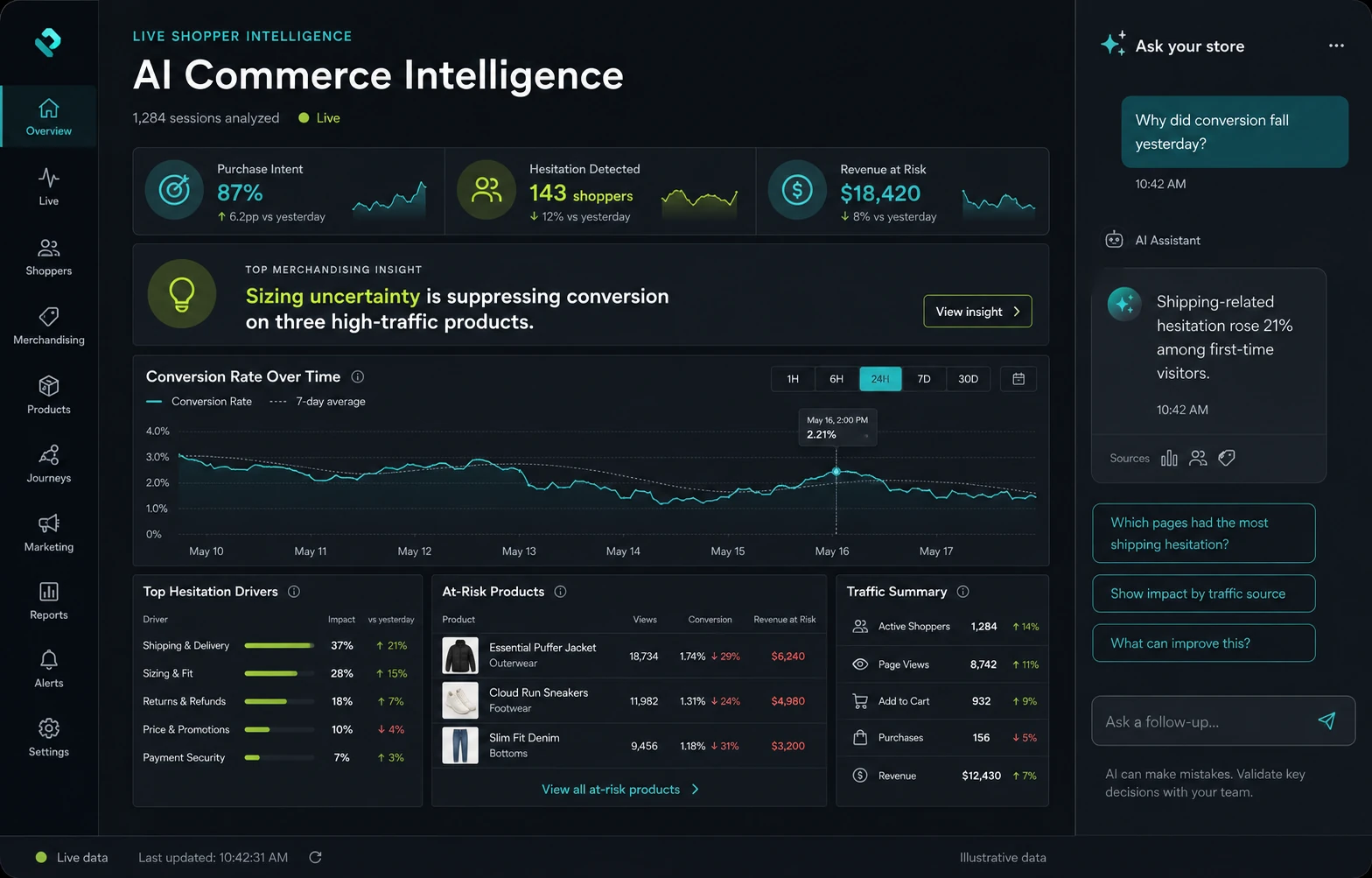
An intelligence layer that understands why shoppers buy and why they don’t.
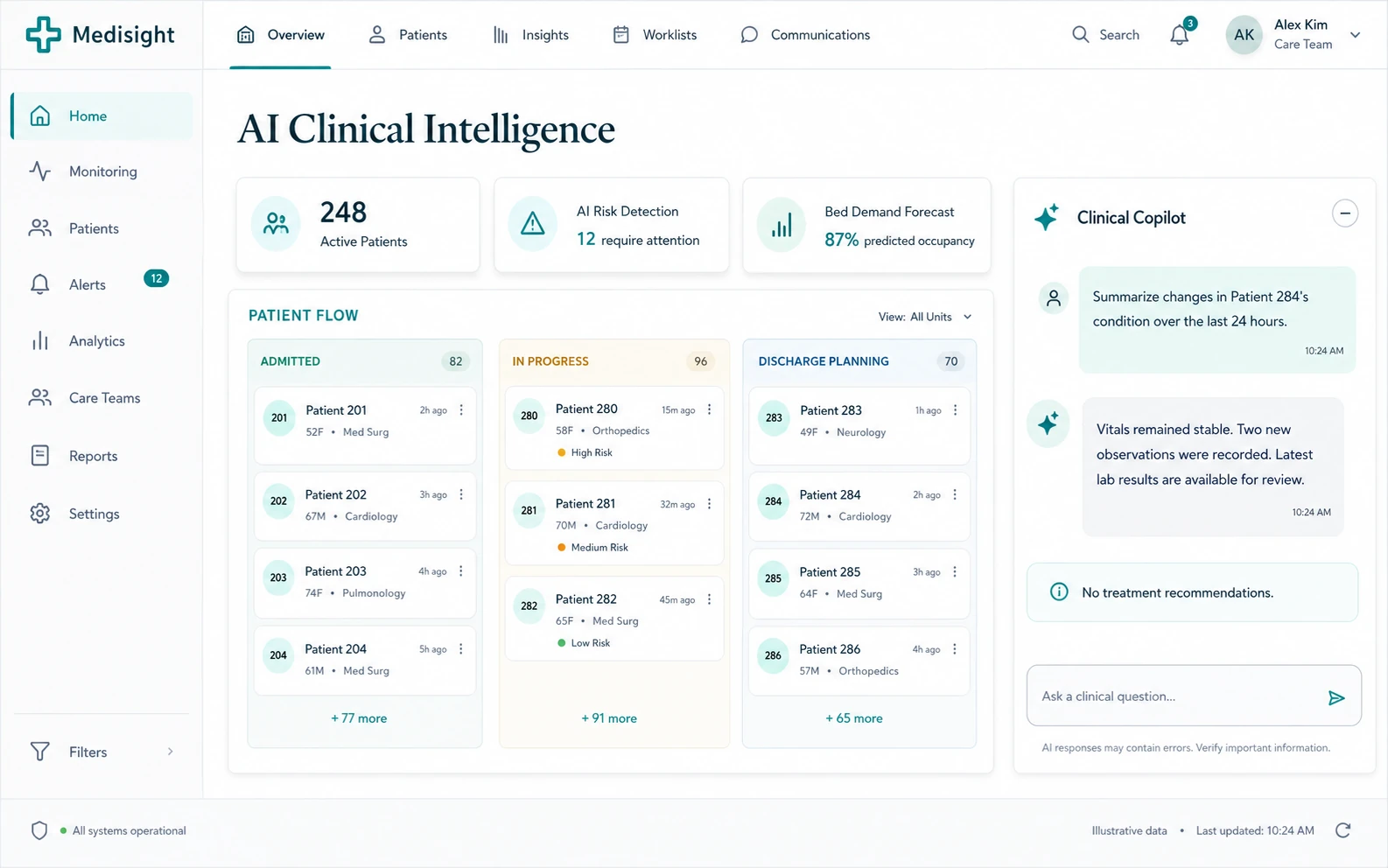
Patient flow, operational risk signals, and a clinical copilot that brings the right context together.
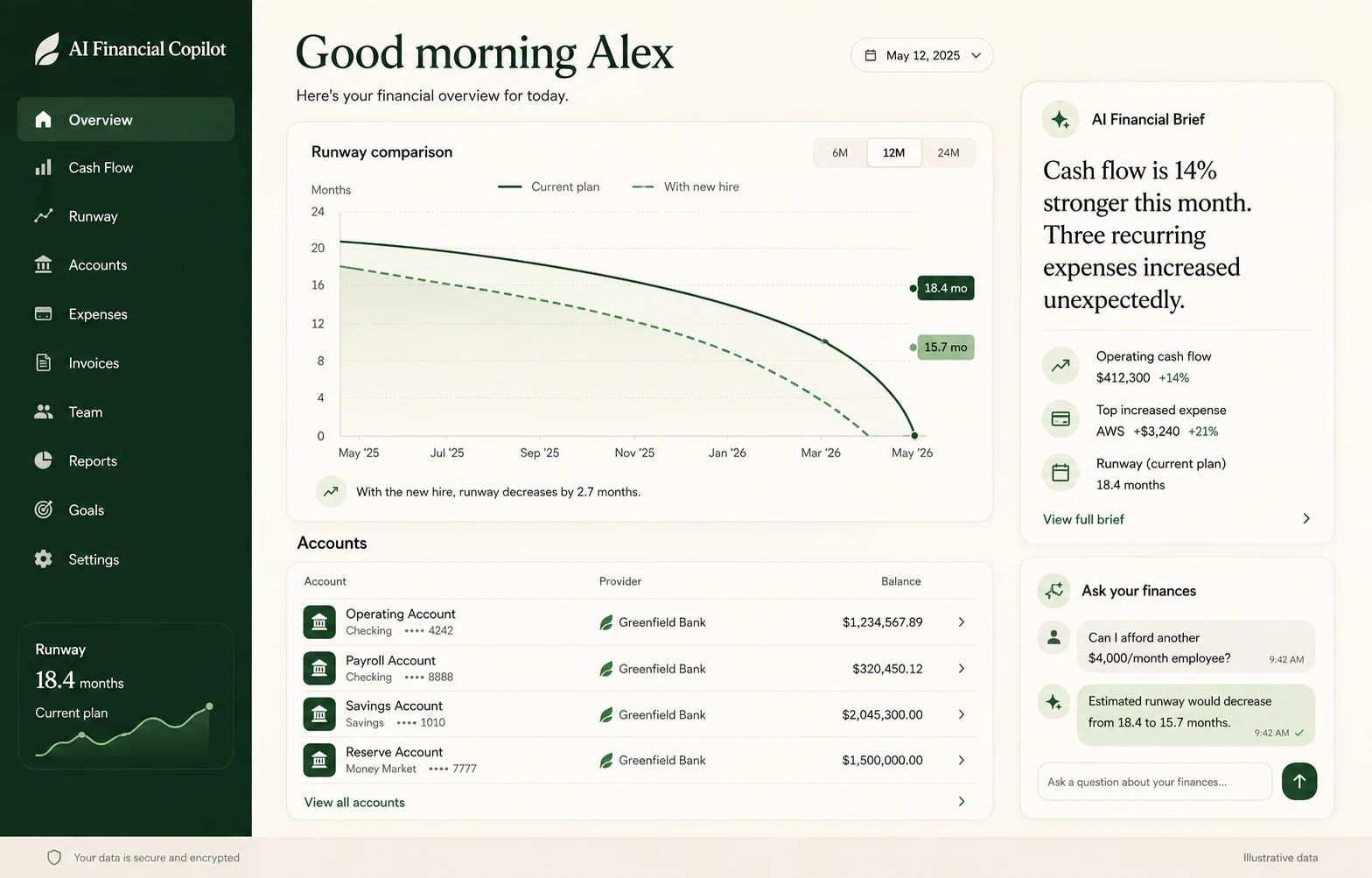
A clearer view of cash flow, changing expenses, and what the next hire could mean for runway.
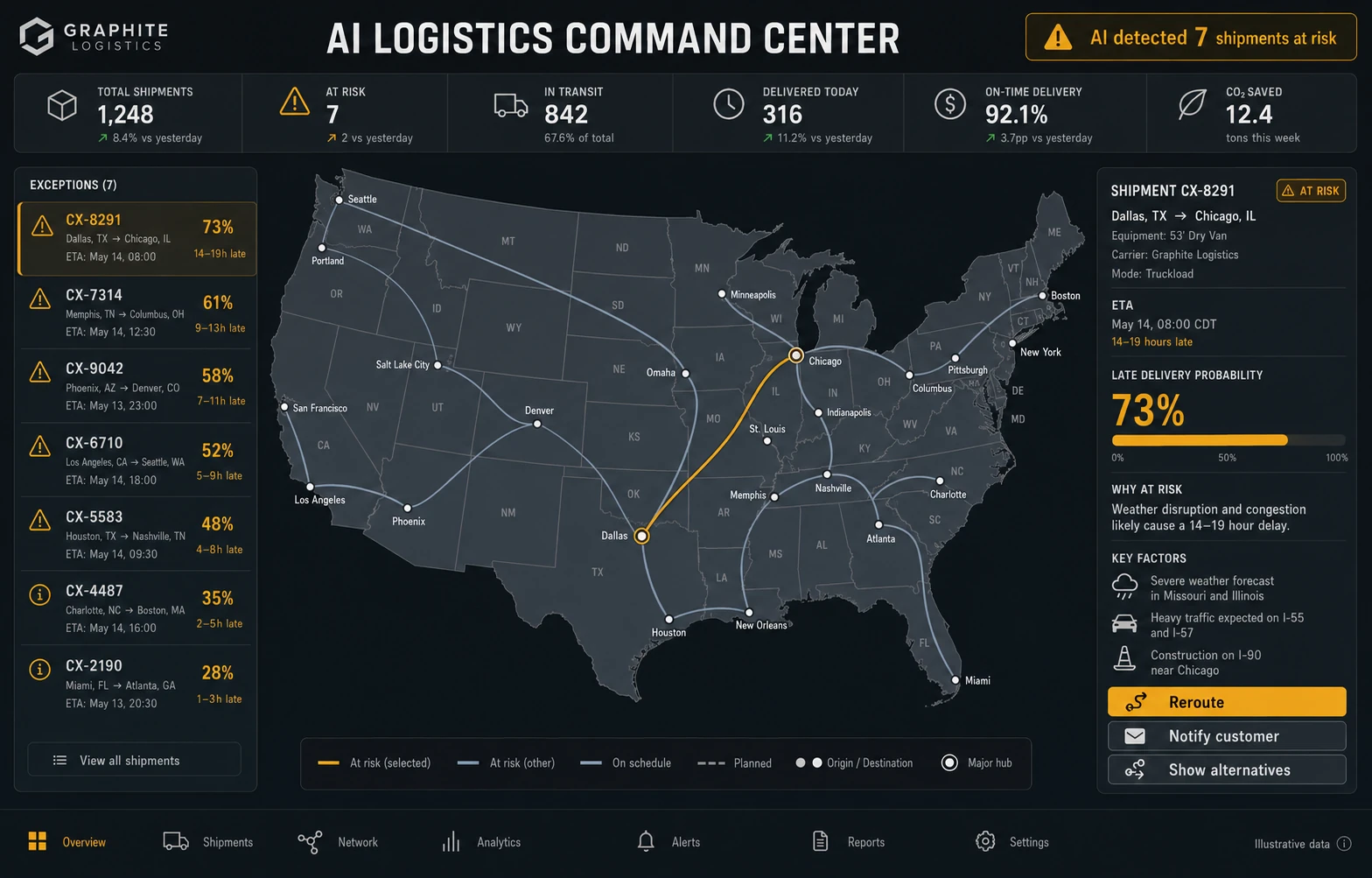
Spot shipments at risk, understand the disruption, and weigh the next best action.
Want the full walkthrough of any of these? Ask on the call →
CygnaByte is based in California’s Silicon Valley, with local engineers, local working hours, and local support. We bring software development, AI, and product design into the same conversation, from your first product question to the engineering behind it.
Book a free AI strategy call →building and shipping software
on Upwork, Top Rated
a senior core team plus a vetted engineering bench we scale to the plan; no juniors learning on your budget
from kickoff to a working proof on your data
of the code and IP, from the first commit
Yes, 100%, from the first commit. The repositories live in your GitHub, the infrastructure in your cloud accounts, and the contract says so in plain English.
Model choice is only part of it. We look at tokens per task, context growth, retries, agent loops, and usage patterns. Cost per successful task belongs alongside quality and speed when deciding what to ship.
Define the expected workload first: active users, simultaneous requests, model latency, data volumes, and cost limits. Then design and load-test against those targets. Capacity claims need measurements; there is no universal user-count guarantee.
In practice that means stateless Go services on the hot paths, where goroutines let a single node hold hundreds of thousands of open connections cheaply, and Kubernetes autoscaling that adds pods as load climbs and removes them as it falls. Concurrency also depends on everything around the service keeping up: connection pooling and read replicas so PostgreSQL never becomes the choke point, Kafka to queue writes and absorb bursts with backpressure, Redis for caching, sessions and rate limits, and idempotent APIs with timeouts and circuit breakers so one slow dependency cannot stall the rest. For AI calls we add request queues, per-provider rate-limit handling, response caching and fallbacks, because model latency, not CPU, is usually what piles up. Then we load-test at the target concurrency against p99 latency budgets before launch.
Yes. You can send us your NDA or use our template. Code and IP ownership, fixed-price milestones, and who participates in delivery can all be confirmed in the agreed terms before we have a conversation.
That depends on the core workflow, data readiness, integrations, and launch requirements. We will give you a free of cost scoped proposal with deliverables, acceptance criteria, and explicit assumptions before committing to a build.
Whichever fits the job: Claude, OpenAI, Gemini, or open-source models. We build behind a model-agnostic layer so switching providers is a configuration change, not a rewrite, which is useful when prices or quality shift, which they do.
It stays in your cloud, under your keys, in your tenant. We never train models on it. We sign your NDA and DPA, and we design for SOC 2 and HIPAA readiness when your market needs it.
Thirty days of support are included in every MVP. After that, Scale & Run gives you the same senior team month to month, cancel anytime, or we do a clean handover to your hires.
You don’t have to know the model, architecture or technical vocabulary. Tell us what the product should make possible.
Book a free AI strategy call →to talk through your idea, the biggest unknowns, and a useful next step.
Start with the broad strokes. Confirm confidentiality terms before sending sensitive information.
Or send us a note