Understand the existing flow
Define the user, the task and the conditions a successful outcome needs to meet.
Add useful AI features to your current software while preserving its authentication, workflows, data rules and release process.
A clear path from input to outcome.
An existing product often has a clear opportunity for AI: document search, assisted drafting, record summarization or workflow support. Begin with the current user journey and identify where effort or delay occurs. Scope one improvement with a measurable result rather than adding a chat interface without a defined purpose.
Define the user, the task and the conditions a successful outcome needs to meet.
Connect the interface, data and application behavior around the agreed workflow.
Evaluate representative cases, handle failures and prepare a practical release.
Extend the software your users already know and rely on.
Discuss your requirements →We examine API boundaries, authentication, data ownership, background jobs and deployment conventions. The integration should reuse your established permissions and fit the product’s interface. Existing tests and performance baselines help identify regressions introduced by the new feature.
Define which fields can be sent to a provider and how requests and responses are logged. Apply redaction or minimization where appropriate. Customer access rules still apply to retrieved context. Review provider configuration and contractual data handling requirements before connecting production data.
A feature flag or limited rollout can make the behavior easier to observe and reverse. Keep a usable fallback when the provider times out or reaches a rate limit. Set limits on request size and usage, and record latency, errors and task outcomes without exposing unnecessary sensitive content.
Bring the existing feature flow, a codebase overview, representative inputs and desired outputs. Identify the release environment and any security requirements. We define the integration contract, evaluation cases, rollout plan and acceptance criteria so the enhancement can be reviewed alongside the rest of your product.
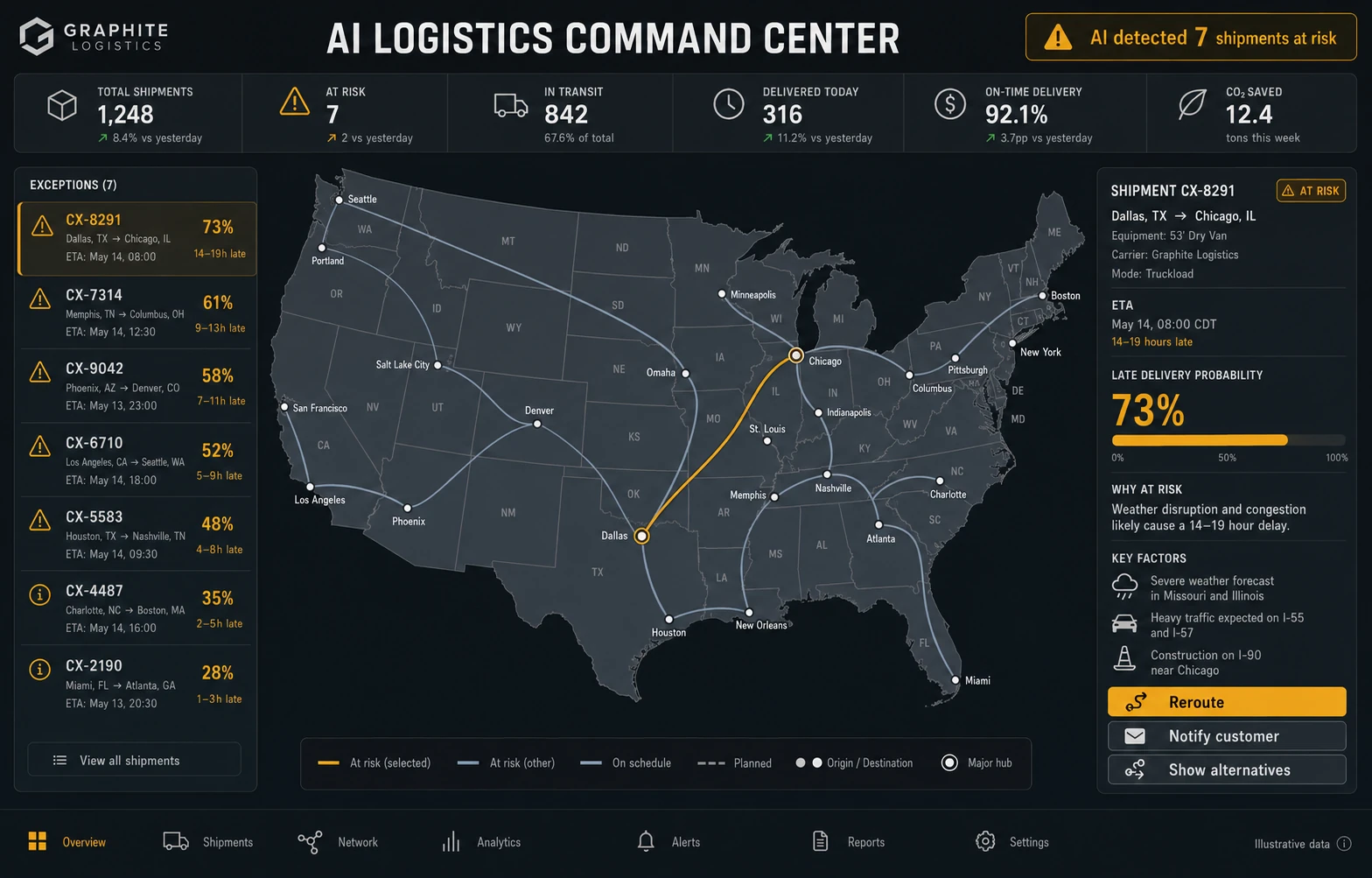
Explore the product interfaces and project work featured in our portfolio. A useful AI experience connects the interface to the data, workflows and systems underneath it.
Explore our work →We work with existing applications built on Go, Python, Laravel, Node.js, NestJS, React, Vue.js and Svelte, including MySQL, PostgreSQL and MongoDB data layers. We review the current implementation before choosing how the AI feature should connect.
Tell us what you want to make possible. We’ll help you define a useful next step.
Most products combine a few capabilities. Explore the services that support the next part of your roadmap.