Connect your knowledge
Define the user, the task and the conditions a successful outcome needs to meet.
Connect AI to your documents and business knowledge with retrieval, source references and access controls designed around your users.
A clear path from input to outcome.
Retrieval-augmented generation, or RAG, searches relevant material before a model writes an answer. It can support an internal knowledge assistant, document search or a product that explains domain-specific information. Retrieval does not guarantee correctness, so source references and evaluation remain essential parts of the experience.
Define the user, the task and the conditions a successful outcome needs to meet.
Connect the interface, data and application behavior around the agreed workflow.
Evaluate representative cases, handle failures and prepare a practical release.
Bring proprietary information into a searchable product experience.
Discuss your requirements →Start with an inventory of documents, databases and update schedules. The pipeline may need text extraction, normalization, chunking and indexing. Preserve source identifiers and metadata so results can be traced and updated. Scanned documents may need OCR, and different layouts should be tested before choosing an extraction approach.
We consider keyword, semantic or hybrid retrieval depending on the content and task. A useful evaluation set includes questions with known answers, questions that span multiple documents, and questions the collection cannot answer. Measure relevant-source retrieval separately from answer correctness so improvements target the right part of the system.
A search result must not reveal content that the user cannot access. Apply document and tenant permissions during retrieval and when opening cited sources. Define how removals, permission changes and new versions reach the index. Treat retrieved text as untrusted input and constrain any connected tools.
A knowledge system needs maintenance when documents change. Agree how updates are ingested, when stale content expires, and how failed extraction jobs are handled. Your discovery brief should include sample documents, access rules, expected question types and the required freshness of answers.
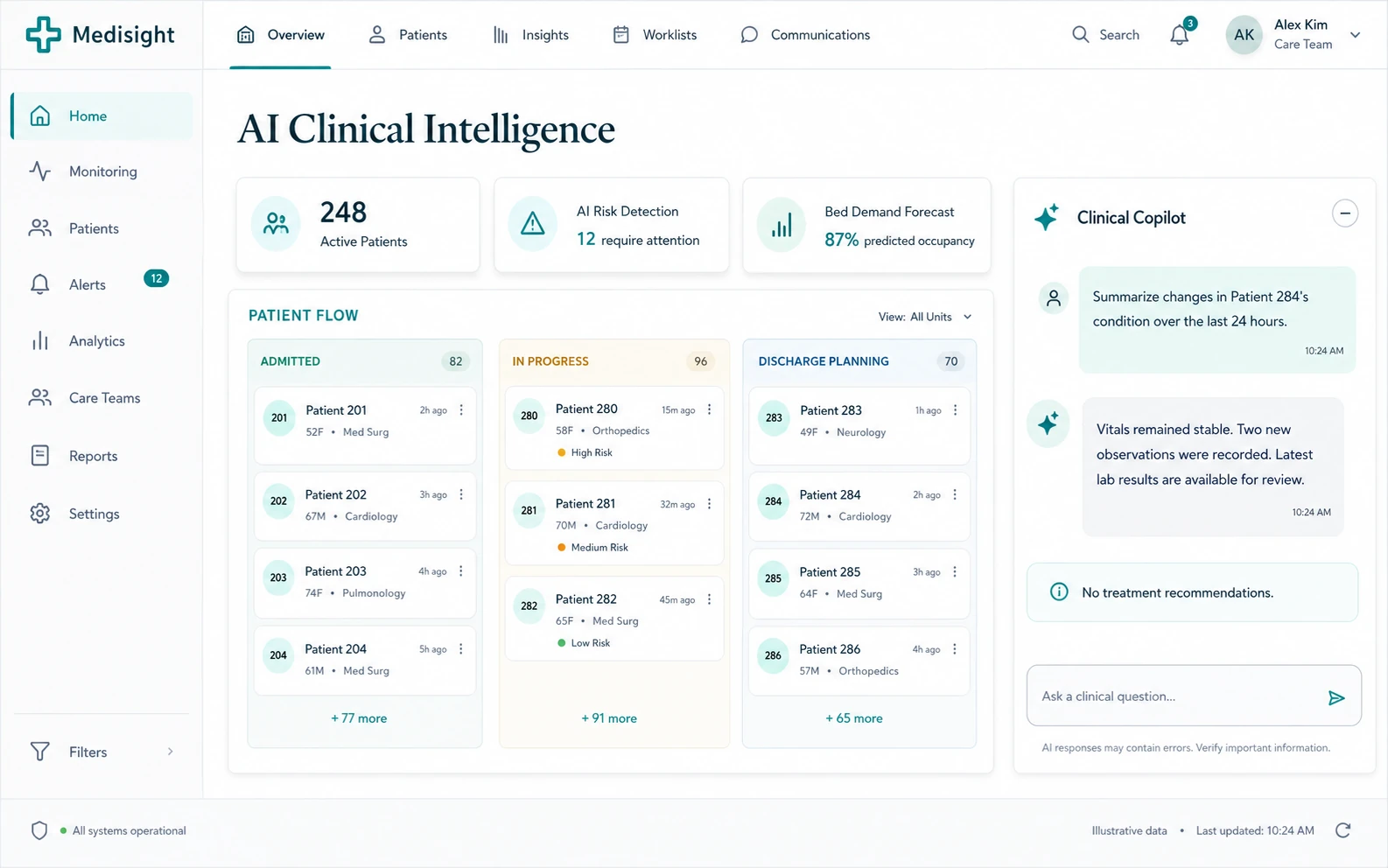
Explore the product interfaces and project work featured in our portfolio. A useful AI experience connects the interface to the data, workflows and systems underneath it.
Explore our work →We work with Python, Go, Laravel, Node.js and NestJS application backends, and with MySQL, PostgreSQL and MongoDB data layers. Retrieval infrastructure is selected separately around the content, access rules and evaluation requirements.
Tell us what you want to make possible. We’ll help you define a useful next step.
Most products combine a few capabilities. Explore the services that support the next part of your roadmap.