APIs and real-time gateways
Idempotent HTTP APIs and WebSocket gateways for chat, feeds, notifications and streamed AI answers.
Go backends.
Measured under load.
High-concurrency Go backends for AI products and platforms: APIs, real-time gateways and event-driven services, with millions of concurrent users as the design target and load tests before launch.
Hot paths stay stateless. Slow work waits in a queue.
AI products put an unusual load on a backend: many requests waiting on slow model calls at once, long-lived connections for streamed answers, sharp bursts after a launch. Go suits that shape. Goroutines keep each waiting request lightweight, so one node can hold hundreds of thousands of open connections.
Idempotent HTTP APIs and WebSocket gateways for chat, feeds, notifications and streamed AI answers.
Services that talk through Kafka events, workers for long jobs, and queues that pace model calls.
PostgreSQL and Redis set up for the traffic you plan for, with a sharding path drawn early.
Seed to Series B founders and technical leads in fintech, healthtech, social and marketplaces, e-commerce and logistics.
Each model call holds a request open while the model works. Under load, a backend built for quick database reads runs out of connections long before it runs out of CPU, so queues, streaming and per-provider limits belong in the first design.
Chat, feeds, notifications and live market data mean many open connections, and a single update may have to reach every follower’s open socket. Fan-out is designed in from the first release.
Traffic or a new AI feature is finding the limits of the backend you launched with. We move the hot paths to Go one service at a time, with no big-bang rewrite.
What each layer does, and why. For the AI-specific reasoning, read Scaling an AI SaaS backend with Go.
Every hot path runs in a stateless Go service, with sessions and work in progress in Redis, PostgreSQL and Kafka, so any pod can serve any request. Kubernetes autoscaling on AWS or GCP, in your accounts, adds pods as load climbs and removes them as it falls.
WebSocket gateways hold the open connections; services publish updates through Redis pub/sub for each gateway to deliver. No user is tied to one gateway pod: during a deploy, a pod drains its connections and clients reconnect to any other. Pub/sub keeps no history, so recent events also go to a durable log, and a reconnecting client catches up from the last event ID it saw.
Every write is an event on Kafka. Services consume at their own pace, so bursts are absorbed with backpressure and a slow consumer never takes down a fast one. Workers take long jobs such as document processing, and a service added later can catch up from retained events.
Connection pooling keeps a growing fleet of pods from exhausting the database. Read replicas serve read-heavy endpoints, while read-your-own-write queries go to the primary. Messages, events and usage records are partitioned from day one, and the sharding path, usually by tenant, is designed before you need it. Analytics runs on its own store, not on production.
Idempotency keys deduplicate retried requests, and stored event IDs do the same for payment webhooks, before either changes anything. Rate limits per user, tenant and API key live in Redis, every outbound call has a timeout through Go’s context deadlines, and circuit breakers fail fast when a dependency slows. Model calls get request queues, per-provider rate-limit handling, response caching and a fallback provider, because model latency, not CPU, is usually what piles up.
Every backend gets a load test at its target concurrency, and the harness fails the run when p99 latency goes over budget. Metrics, traces and alerts ship with the first release, covering p99 latency, error rates, queue depth, consumer lag and cost per request.
Contract-first, harness-tested modules: every engineer gets a harness and a job, and nothing is wired in unless it works in the harness.
See how we work →Each service starts as a written API contract: endpoints, request and response shapes, error codes, idempotency rules and a p99 latency budget, plus an event schema for each Kafka topic. Its harness pairs contract tests that check every documented response, including errors and retries, with a load test that fails if p99 goes over budget at the service’s share of target concurrency.
The gateway, auth, usage metering with Stripe webhooks, the model queue and notification fan-out are built in parallel, so adding engineers speeds the build up. Each fuse is wired in only after it passes, then the whole system is load-tested at target concurrency, deployed and monitored, and what you learn feeds the next contracts. Circuit breakers at each boundary keep one failing service from taking the platform down.
Hot paths go in Go. Around them, we work in Python, Node.js, NestJS and Laravel when they fit: Python where the AI and data libraries live, Node.js or NestJS when your team already runs them, Laravel for an admin or content system that already works. Taking over an existing codebase starts with its architecture and conventions.
Typical ranges for a Golang development engagement; the scoped proposal confirms yours.
A free AI strategy call covers your product, expected load and the parts of the backend that worry you. The free scoped proposal lists deliverables, acceptance criteria, explicit assumptions and the concurrency target the build is tested against.
Day 1 fixes the use case and the single number it has to move. Days 2–3 review your data and current stack, and days 4–6 settle the model, retrieval or agent approach, keeping only what earns its cost. For a backend, days 7–9 carry the most weight: they set the target concurrency, the p99 budget, the service boundaries and the security model. Days 10–12 plan the build, and day 14 shows it working on your data, with a go/no-go.
Each weekly demo runs real services end to end and shows their harness results: contract tests passed and p99 against budget. The number of services, real-time features, migration from an existing system, compliance readiness and the concurrency target decide where you land in the range.
The backend goes live in your AWS or GCP account with dashboards and alerts already running. After launch, the same senior team can stay on through Scale & Run, month to month and cancel anytime, or the system passes to your own hires with handover docs written for them. We are based in Silicon Valley and build with founders across the US; read how a build runs for Bay Area startups on Pacific Time.
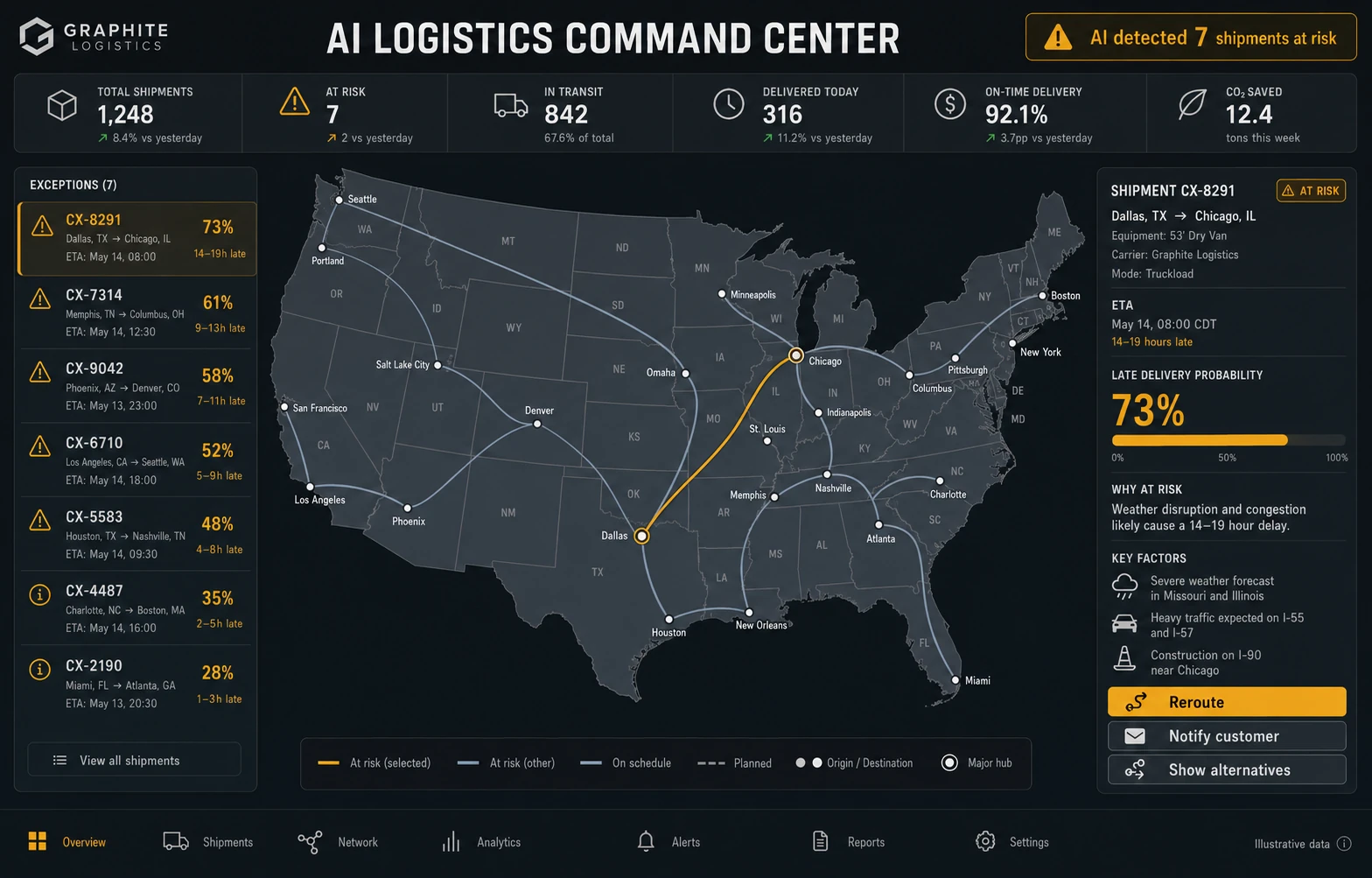
The architecture on this page is the one that runs the social platforms, trading infrastructure and SaaS products we’ve built for clients. Explore the product interfaces featured in our portfolio.
Explore our work →What founders and technical leads ask before a Go backend build.
Most of an AI request is spent waiting on the model, so the backend has to hold many waiting requests at once. Goroutines keep each one lightweight, and Go spreads work across every CPU core in one process. Node.js handles waiting well too, but CPU-heavy work blocks its event loop. Python stays where the AI and data libraries live.
Millions of concurrent users is the design target for every social, marketplace and trading backend we build, but capacity claims need measurements, and there is no universal user-count guarantee. We define your workload first, including active users, simultaneous requests, model latency and data volumes, then load-test at that target against p99 latency budgets before launch.
You need the design from day one, not the full scale. We plan the event flows, service boundaries and scaling path up front, then size the first deployment to your launch traffic, with a small cluster and only the topics the product uses. As load grows, capacity comes from configuration and autoscaling rather than a rewrite.
Yes. We start with its architecture and conventions: we read the code, map the data model and hot paths, and profile it under realistic load before proposing changes. Usually only the hot paths move to Go, one service at a time, while the rest keeps running in Python, Node.js, NestJS or Laravel.
Cost per request sits on the same dashboards as p99 latency and error rates. Autoscaling removes pods when load falls, analytics stays off the production database, and caching and per-tenant limits keep model calls from multiplying. For AI features we track tokens per task, context growth, retries and agent loops.
In your own AWS or GCP accounts, with the repositories in your GitHub. From the first commit, 100% of the code and IP belongs to you, and the contract says so in plain English. We sign your NDA and DPA, and where your market requires SOC 2 or HIPAA readiness, the backend is built for it from the first sprint: audit logs, encryption and least-privilege access.
Bring your product, your expected traffic and the parts of the backend that worry you. We’ll help you define a useful next step.
Most products combine a few capabilities. Explore the services that support the next part of your roadmap.